Design like a pro (even if you’re new to the Editor)
You’ve got the structure down. You’ve avoided the classic missteps. Now it’s time to take your content from good to great. From film-based course structure to assessment writing, we’ll show you how to apply best practices without getting lost in the weeds.
Building a great course or resource isn’t about dumping everything you know onto a page—it’s about crafting a meaningful experience for your learners. One that’s clear, engaging, and built for brains under pressure.
In attached PDF found below, you’ll learn:
How to start with purpose and explain why it matters
What a strong structure looks like (and why consistency builds trust)
How to turn a passive video or book into an active learning experience
Best practices for pacing, relevance, reflection, and trauma-informed design
Real tips for writing good quiz questions, using video well, and avoiding plagiarism pitfalls
Whether you’re just starting or looking to level up your course design, these tips are your go-to guide for building with care and clarity.
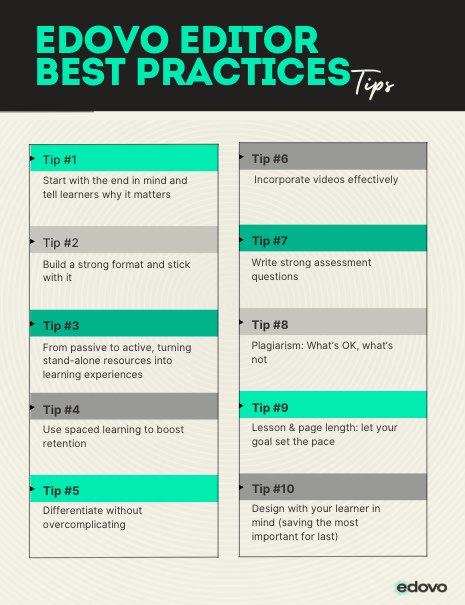

Download the full PDF below.
Related Articles
A practical guide to the Edovo Editor: How to build, preview, edit and publish active content
Learn how to build, preview, edit, and publish courses and interactive resources onto Edovo Wondering, “Do I need to be a coder to use the Editor?”—breathe easy. You don’t. This article gives you the roadmap so you too can create active content in ...
Why Learners Drop Off and How to Design Courses That Keep Them With You
Why learners might be zoning out and what to do about it: A practical guide to cognitive load, learning science, and designing courses that support learning success. (Buckle up. This is a longer article on purpose. We’re covering a lot, but it’s the ...
Now Available: Preview Content in Editor
Skip the Ticket: Preview your content directly in Edovo Editor! Creating high-quality content for learners just got easier. With the new preview feature, you can see your courses and resources exactly as learners will while you're still building ...
How to design content that meets people where they are
Designing for impact, not just instruction Want to create content that connects, not condescends? This guide walks you through how to write and design for incarcerated learners using strategies backed by trauma-informed practice, neuroscience, and ...
One Course, Many Learners: How to Design Courses That Adapt in Self-Paced Learning
Research-backed strategies for designing flexible, differentiated lessons that reach every learne. Not everyone starts at the same line Imagine three people opening your course. One is locked in and flying. One is curious but cautious. One is ...